New Thing Nurse

Let us help with your new thing.

  • NTN Consults
  • Home
  • About
    • Who is the New Thing Nurse?
    • NEW THING NURSE
    • DISCLAIMERS
  • TEMPLATES
  • Services
    • NURSING STUDENTS & NEW GRADS
    • EXPERIENCED NURSES
    • NURSE PRACTITIONERS
    • WORKSHOPS & EVENTS
    • FAQ: HAVE A QUESTION? READ THIS
    • REVIEWS
  • ADVOCACY
  • BLOG
  • RESOURCES
    • FAVORITES
    • PPE CARE PACKAGE PROJECT
    • MENTAL HEALTH
    • VIOLENCE AGAINST HEALTHCARE WORKERS
  • CONTACT

Navigating Social Media as a Nurse: Building a Professional Presence Without Losing Yourself or Your Job

September 09, 2026 by Sarah Wells

By: Sarah K. Wells MSN RN CEN CNL

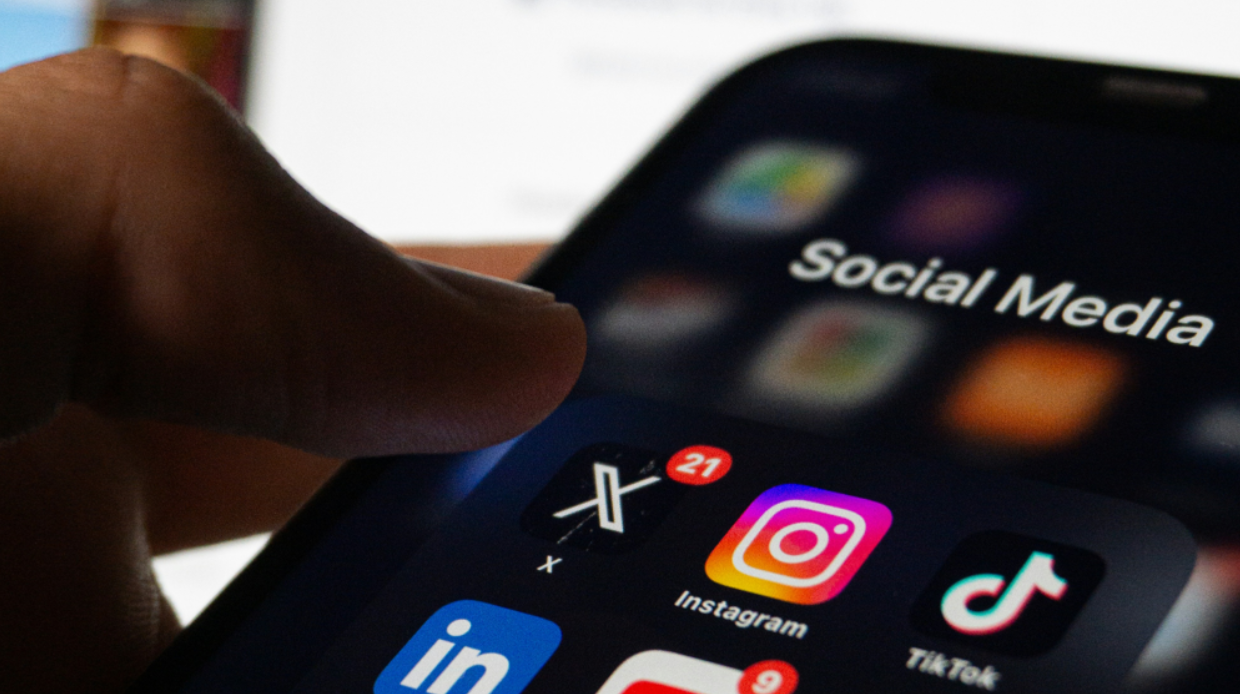
With a smartphone in every pocket, everyone can now be a content creator. As nurses, we have to take special precautions in what we post and share online. Nursing has always been a public-facing profession, but "public" used to mean the unit, the hospital, or the community you served in person. Today it also means LinkedIn, Instagram, TikTok, and whatever social media platform comes next. For nurses, that shift brings real opportunity, and real risk, in roughly equal measure.

Why This Conversation Matters Now

Nurses are rated the most trusted professionals in the United States year after year. When a nurse posts about patient care, life on the floor, or health topics, people listen differently than they do to almost any other voice online. That's a powerful platform for advocacy, education, and career growth.

It can also be a liability if handled carelessly. A single post, even one meant as a joke, a vent, or a "harmless" story, can violate patient privacy, damage a nurse's or employer's reputation, and unfortunately, has the potential to end a career. Boards of nursing have disciplined nurses for social media conduct, and HIPAA doesn't take a break just because something feels anonymous enough in your head.

So the goal isn't to avoid social media. It's to use it intentionally.

What Professional Social Media Use Actually Looks Like

1. Treat every post as public and permanent.

Privacy settings help, but screenshots exist. Before posting, a useful gut check: would you be comfortable with your nurse manager, a patient's family, or your state board seeing this? If the answer is no, do not proceed.

2. Know your employer's policy before you need it.

Most healthcare organizations have explicit social media or professional conduct guidelines. Read yours. Some restrict posting photos in uniform, with the company logo, or on hospital grounds; others require disclaimers on health-related content (ex: "Views are my own"). Knowing the policy in advance protects you far better than apologizing after the fact.

3. Separate your clinical voice from your personal one.

Many nurses maintain a professional presence sharing evidence-based health information, career insights, or advocacy topics separately from personal accounts where friends and family follow. This isn't about hiding who you are; it's about giving your audience clarity on what they're getting from you.

4. Never identify a patient, even indirectly.

This is bigger than names and photos. Room numbers, diagnoses, unusual circumstances, timing details, or even an inside joke about "that patient today" can be enough to identify someone in a small community or a specific unit. The safest rule is the simplest one: don't post about patients, full stop. If you want to reflect on a hard shift, talk about your own experience and emotions, not the clinical details.

5. Use platforms to build your career, not just your following.

LinkedIn in particular rewards nurses who share genuine expertise: professional lessons learned, a perspective on a policy change, a resource for new grads. This kind of content builds credibility, opens doors to networking, different roles, or leadership tracks. It is far more reliably than a viral moment.

The Upside Is Real

Nurses who engage thoughtfully online are shaping public understanding of the profession in ways that matter. During public health crises, nurse voices online have corrected misinformation and provided reassurance. Nurse creators have demystified the profession for people considering a nursing career. Nurses have used LinkedIn to advocate for appropriate staffing and healthy working conditions, reaching leaders, legislators, and the public alike.

Professional social media use isn't about filtering nurses. It's about making sure the enormous trust placed in this profession translates into a voice that's heard and respected.

More Tips Worth Bookmarking

If you want a deeper dive, the American Association of Critical-Care Nurses (AACN) published a helpful piece on this exact topic:

  • "Do's and Don'ts of Social Media Use for Nursing Professionals" >> https://www.aacn.org/blog/dos-and-donts-of-social-media-use-for-nursing-professionals

It's a good companion read to this post because it lays out practical tips and strategies rather than just principles. You also might recognize the author.

A few highlights:

  • Something as small as an unblurred badge or a computer screen visible in the background of a photo has been enough to create a HIPAA problem. The risk isn't always the obvious overshare: it's the incidental detail you didn't think to check.

  • Posting while on shift is one of the more common professional-conduct violations, and it carries extra risk if anything goes wrong clinically at the same timestamped moment you were online.

  • Connections with patients or their families online deserve real caution, even acknowledging that you're someone's nurse in a public comment thread can cross a confidentiality line.

  • Content shared online should be treated as though it may one day be reviewed in a courtroom. Once something is posted, it's effectively permanent, regardless of whether it's later deleted.

Worth a full read if you're building or refining your own social media practice or the policy for your unit.

A Few Questions Worth Asking Before You Post

  • Does this post include any detail, however small, that could identify a patient?

  • Am I speaking as myself, or could this be read as representing my employer?

  • Would I be comfortable explaining this post to my nurse manager or state board?

  • Is this the platform and tone I want associated with my professional reputation?

None of this requires nurses to be silent or sanitized online. It requires the same thing good nursing practice always has: judgment, care, and respect for the people we serve, only extended now to a much larger, much more permanent audience.

What's your take? How does your organization approach social media guidance for healthcare staff, and where do you draw your own personal line?


About the Author:

Sarah K. Wells, MSN, RN, CEN, CNL is an experienced nurse career strategist dedicated to helping nurses and nurse practitioners of all experience levels and specialties achieve success in their nursing and NP journeys. Sarah founded New Thing Nurse and NTN Consults to help provide support and guidance to the nursing and healthcare community in a simple and direct format. Sarah’s vision is to foster a more supportive and fulfilled nursing world that spreads throughout healthcare and beyond.

Sarah has partnered with Ripple Health AI as a Nurse Advisor and Business Development Lead. The original version of this article appeared on the Ripple Health AI Insights blog.

Sarah is serving as a 2026 Advocacy Fellow with ANA-California, focusing on AI and equitable nurse staffing. Learn more about the 2026 ANA-California Advocacy Fellowships.


New Thing Nurse helps the nursing and NP community thrive in their careers! Join us on IG or Facebook @newthingnurse 🩺

September 09, 2026 /Sarah Wells
2026, LINKEDIN, SOCIAL MEDIA, PROFESSIONAL, NETWORKING, NEW THING NURSE, RESUME, JOB APPLICATIONS, NEW JOB, ATS, NURSE, NURSING, NURSING STUDENT, NURSE TRIBE, NURSE MOM, NURSE LEADER, NURSE CONSULTANT, NURSEING, RN, REGISTERED NURSE, STUDENT NURSE, NURSING SCHOOL, FUTURE NURSE, RNS, NURSING STUDENTS, NURSINGSCHOOL, NURSINGSTUDENT, JOB, FIRST JOB, JOBS, NURS JOB, NURSE JOB, JOB OPPORTUNITIES, JOB SKILLS, RESUME WRITING, SKILSS, HOW TO, MYTHS, TRUTH, TRAVEL, TRAVELING, TRAVEL NURSE, TRAVEL NURSING, ICU, ER, ED, ED NURSE, ER NURSE, ICU NURSE, PCU, MEDICAL SURGICAL, TELEMETRY, HOSPITAL, HOSPITAL JOB, HOSPITAL LIFE, STUDENT NURSE LIFE, MEDICAL, MEDICINE, HEALTHCARE, HEALTH, DIY, DO IT YOURSELF, JOB SEARCH, NURSE LIFE, NURSE STRONG, NURSE LOVE, LOVE, SUCCESS, SUCCESSFUL, SUCCEED, CLIENTS, CLINIC, CLINICS, COVER LETTER, INTERVIEW, INTERVIEWS, INTERVIEW ADVICE, ADVICE, INTERVIEW COACHING, INTERVIEW COACH, INTERVIEWER, JOB INTERVIEWS, JOB INTERVIEW, PAY, COMPENSATION, PAYCHECK, PAY CHECK, JOB ADVICE, NEGOTIATIONS, WAGES, WAGE, PRECEPTOR, PRECEPTORSHIP, NEW GRAD NURSE, NURSINGSTUDENTLIFE, ORIENTATION, INTENTIONS, NEW YEAR, GOALS, ADVOCACY, AI, ARTIFICIAL INTELLIGENCE, WORKFORCE BUILDING, STAFFING, NURSE STAFFING, HIRING, SCHEDULING, NEW GRAD, COMMUNICATION, TRANSFORMATION, social media
Comment

What Every Nurse Needs to Know About AI

August 27, 2026 by Sarah Wells

By: Sarah K. Wells MSN RN CEN CNL

I write a lot about technology, nursing, and healthcare. For the last year, I have been learning more and more about artificial intelligence (AI) in healthcare. AI has entered the clinical environment fast. As a nurse, here are tips how to work with it confidently and critically.

Healthcare has seen waves of technology come and go: electronic health records (EHR), telehealth, wearable monitors, virtual nursing are just a few examples. AI feels different, and for good reason. Unlike a new charting system or a “smarter” infusion pump, AI doesn't just assist with a task. It increasingly participates in clinical decision-making. In some cases, it can feel like it is making decisions for you. For nurses and other clinicians, that changes everything.

As a nurse in the AI era, you don't need to become a data scientist. But you do need to understand what AI is doing in your workplace, where it can go wrong, and how your professional judgment remains irreplaceable.

AI in Healthcare Is Already Here

Many nurses are already working alongside AI without realizing it.

Common applications include:

Clinical decision support. Algorithms embedded in EHR systems flag deteriorating patients, suggest sepsis alerts, or highlight potential drug interactions. If your hospital uses an early warning score that updates automatically, that's AI (or at least machine learning) at work.

Diagnostic imaging. Radiology and pathology departments increasingly use AI to complete a first-pass scan on images for anomalies, detecting potential fractures, tumors, or diabetic retinopathy, before a physician reviews them.

Predictive analytics. Some systems forecast which patients are at risk of readmission, pressure injuries, or falls, so care teams can intervene earlier. Predictive analytics are also being used in staff scheduling tools.

Administrative automation. AI is being used to transcribe clinical notes, pre-authorize insurance requests, and draft discharge summaries to potentially free up time that might otherwise be spent on paperwork.

What AI Does Well (and What It Doesn't)

AI excels at pattern recognition across enormous datasets. A model trained on millions of chest X-rays can identify subtle findings that a tired radiologist might miss at 2 a.m. In that narrow task, AI can be genuinely impressive.

But AI has real limitations that every nurse should understand:

It reflects the data it was trained on. If the training data underrepresented certain populations, which has historically been a common issue, the model may perform worse for those patients and worse, perpetuate bias that can increase instead of mitigate health inequities. Tools validated on predominantly white, male, or urban populations may not transfer well to your patient population.

It doesn't know what it doesn't know. AI systems can produce confident-looking outputs even when they're operating outside their reliable range. A model will rarely say "I'm not sure.” It will instead give an answer that it will make the user “happy”. AI is programmed to be agreeable, often prioritizing a user’s “happiness” over objective facts. Checking that answer against your clinical assessment is essential.

It can't account for context the way you can. The algorithm doesn't know that this patient is terrified of hospitals, that their family dynamics are complicated, or that they've been pushing through pain because they're worried about being a burden. You do. You are the essential NURSE in the AI loop.

It can hallucinate. AI language tools, used for note drafting or summarization, can generate plausible-sounding but factually incorrect content. Any AI-generated text that enters the clinical record needs human review and validation before it becomes part of the permanent chart.

Your Professional Accountability Doesn't Change

This is perhaps the most important thing to understand: when an AI tool makes a recommendation and you act on it, the professional and legal accountability still rests with you.

As of this writing, it is generally the rule that the clinician and their license take on the liability of any AI output (created thing) that is validated and acted upon. This may change in the future, but when you agree with clinical AI, you are signing off that you agree with it.

If a sepsis alert fires and you dismiss it without assessment or if you follow an AI recommendation that conflicts with your clinical judgment, you own that decision. "The algorithm told me to" is not a defense in a nursing board hearing or in a court of law.

This isn't meant to frighten you. It's meant to frame AI correctly: as a tool that informs your practice, not one that substitutes for it. The same way you wouldn't blindly follow an MD order without understanding it, you shouldn't blindly follow an AI recommendation without evaluating and validating it.

Practical rule: Do not have AI tell you what to do. Listen to its suggestions and then use critical thinking, clinical judgement, and verified resources to validate the guidance before acting on it.

Remember: Ultimately, it is your license that is on the line.

How to Think Critically About AI in Your Workplace

When a new AI tool is introduced to your unit, ask these questions:

  • What was it trained on? Has it been validated on data for patients or use cases like yours?

  • What does it optimize for? Some models optimize for cost reduction, not patient outcomes. Understand the goal and center discussions around patient care first and budget second

  • Who is accountable when it's wrong? Get clarity on your facility's policies before a problem arises. An ounce of prevention is worth a pound of response.

  • What does a false positive or false negative look like? Every screening tool makes errors. Know what they are, how to report them, and what to do when they come up.

  • How was staff trained? A good AI tool with poor implementation is a patient safety risk. Advocate for increased educational and training time to set up your patients, your team, and yourself for success.

You don't need to understand the math behind the model to ask these questions. Asking them is itself an act of clinical leadership.

AI and Nursing: A replacement or tool to leverage?

There is a version of the AI conversation that worries nurses about job replacement. That concern deserves honest engagement, not dismissal.

AI will likely automate parts of nursing work, particularly documentation, scheduling, and routine monitoring tasks. Whether that frees nurses to spend more time at the bedside or becomes a justification to reduce staffing is a policy and employer question, not necessarily a technology question. It will depend on how healthcare organizations choose to deploy the tools and adhere to their budgets.

What AI cannot replicate is the relational core of nursing: therapeutic presence, the ability to read a room, the skill of delivering hard news with compassion, the advocacy that happens when a nurse says "something isn't right with my patient." Those capacities are not pattern recognition on historical data. They are embodied, relational, and fundamentally human.

The nurses who will thrive in an AI-enabled environment are those who understand the tools well enough to use them critically, and who continue to develop the distinctly human competencies that no algorithm will replicate.

Practical Steps You Can Take Now

1. Learn your tools. Ask your nurse educator or informatics team to walk you through any AI-powered features in your EHR or monitoring systems. Understanding what they flag — and what they miss — makes you a safer practitioner.

2. Document your clinical reasoning. As AI tools generate more of the data in patient records, your documented reasoning becomes even more important as evidence that a human assessed the whole picture.

3. Speak up about concerns. If an AI alert seems to be firing inappropriately — either too often or not enough — report it. Your frontline observations are how these tools get improved or discontinued.

4. Engage with your professional and advocacy organizations. Groups like the American Nurses Association are developing position statements and guidelines on AI in nursing. Stay connected to those conversations.

5. Be a thoughtful voice in your unit. Not every colleague will have the same level of comfort or skepticism about AI. Being someone who asks good questions — without dismissing the technology or uncritically embracing it — is a form of leadership.

AI is not the future of nursing and healthcare, it is the present. Understanding it well enough to use it wisely, question it appropriately, and advocate for patients and clinicians in its presence, that is the new professional competency. And it is squarely within the tradition of what nurses have always done: meet the moment, with knowledge and compassion, on behalf of their patients, clinicians, and the community at large.


About the Author: Sarah K. Wells, MSN, RN, CEN, CNL is an experienced nurse career strategist dedicated to helping nurses and nurse practitioners of all experience levels and specialties achieve success in their nursing and NP journeys. Sarah founded New Thing Nurse and NTN Consults to help provide support and guidance to the nursing and healthcare community in a simple and direct format. Sarah’s vision is to foster a more supportive and fulfilled nursing world that spreads throughout healthcare and beyond.

Sarah has partnered with Ripple Health AI as a Nurse Advisor and Business Development Lead. The original version of this article appeared on the Ripple Health AI Insights blog.

Sarah is serving as a 2026 Advocacy Fellow with ANA-California, focusing on AI and equitable nurse staffing. Learn more about the 2026 ANA-California Advocacy Fellowships.


New Thing Nurse helps the nursing and NP community thrive in their careers! Join us on IG or Facebook @newthingnurse 🩺

August 27, 2026 /Sarah Wells
2026, LINKEDIN, SOCIAL MEDIA, PROFESSIONAL, NETWORKING, NEW THING NURSE, RESUME, JOB APPLICATIONS, NEW JOB, ATS, NURSE, NURSING, NURSING STUDENT, NURSE TRIBE, NURSE MOM, NURSE LEADER, NURSE CONSULTANT, NURSEING, RN, REGISTERED NURSE, STUDENT NURSE, NURSING SCHOOL, FUTURE NURSE, RNS, NURSING STUDENTS, NURSINGSCHOOL, NURSINGSTUDENT, JOB, FIRST JOB, JOBS, NURS JOB, NURSE JOB, JOB OPPORTUNITIES, JOB SKILLS, RESUME WRITING, SKILSS, HOW TO, MYTHS, TRUTH, TRAVEL, TRAVELING, TRAVEL NURSE, TRAVEL NURSING, ICU, ER, ED, ED NURSE, ER NURSE, ICU NURSE, PCU, MEDICAL SURGICAL, TELEMETRY, HOSPITAL, HOSPITAL JOB, HOSPITAL LIFE, STUDENT NURSE LIFE, MEDICAL, MEDICINE, HEALTHCARE, HEALTH, DIY, DO IT YOURSELF, JOB SEARCH, NURSE LIFE, NURSE STRONG, NURSE LOVE, LOVE, SUCCESS, SUCCESSFUL, SUCCEED, CLIENTS, CLINIC, CLINICS, COVER LETTER, INTERVIEW, INTERVIEWS, INTERVIEW ADVICE, ADVICE, INTERVIEW COACHING, INTERVIEW COACH, INTERVIEWER, JOB INTERVIEWS, JOB INTERVIEW, PAY, COMPENSATION, PAYCHECK, PAY CHECK, JOB ADVICE, NEGOTIATIONS, WAGES, WAGE, PRECEPTOR, PRECEPTORSHIP, NEW GRAD NURSE, NURSINGSTUDENTLIFE, ORIENTATION, INTENTIONS, NEW YEAR, GOALS, ADVOCACY, AI, ARTIFICIAL INTELLIGENCE, WORKFORCE BUILDING, STAFFING, NURSE STAFFING, HIRING, SCHEDULING, NEW GRAD, COMMUNICATION, TRANSFORMATION, ai, artificial intelligence
Comment

Pay Transparency in Nursing

September 12, 2024 by Sarah Wells

By: Sarah K. Wells MSN RN CEN CNL

Pay transparency is a growing demand across industries, including healthcare. 

Applicants want to know the compensation for a job before applying for a position. Thanks to pay transparency laws, job seekers in 10 states currently see the wage or salary of a role in the job posting.  

Why is pay transparency important? 

Pay transparency supports pay equity, which is still a big issue in nursing. Becker’s recently highlighted gender pay disparities in nursing, which shocked me. As a former ED nurse, I’m not easy to shock. 

No transparency laws in your state? Try this:  

  • Research nurse wages in your area on websites like Glassdoor or search the U.S. Bureau of Labor Statistics website. 

  • Ask someone. Snoop around on social media nursing groups and ask about pay for facilities. Do this anonymously whenever possible to avoid problems with potential employers. 

  • Explore growing platforms like Bluem, where nurses will be able to anonymously report their wages. 


New Thing Nurse helps the nursing and NP community thrive in their careers! Join us on IG or Facebook @newthingnurse 🩺


About the Author: Sarah K. Wells, MSN, RN, CEN, CNL is an experienced nurse career strategist dedicated to helping nurses and nurse practitioners of all experience levels and specialties achieve success in their nursing and NP journeys. Sarah founded New Thing Nurse to help provide support and guidance to the nursing community in a simple and direct format. Sarah’s vision is to foster a more supportive and fulfilled nursing world that spreads throughout healthcare and beyond.


September 12, 2024 /Sarah Wells
LINKEDIN, SOCIAL MEDIA, PROFESSIONAL, NETWORKING, NEW THING NURSE, RESUME, JOB APPLICATIONS, NEW JOB, ATS, NURSE, NURSING, NURSING STUDENT, NURSE TRIBE, NURSE MOM, NURSE LEADER, NURSE CONSULTANT, NURSEING, RN, REGISTERED NURSE, STUDENT NURSE, NURSING SCHOOL, FUTURE NURSE, RNS, NURSING STUDENTS, NURSINGSCHOOL, NURSINGSTUDENT, JOB, FIRST JOB, JOBS, NURS JOB, NURSE JOB, JOB OPPORTUNITIES, JOB SKILLS, RESUME WRITING, SKILSS, HOW TO, MYTHS, TRUTH, TRAVEL, TRAVELING, TRAVEL NURSE, TRAVEL NURSING, ICU, ER, ED, ED NURSE, ER NURSE, ICU NURSE, PCU, MEDICAL SURGICAL, TELEMETRY, HOSPITAL, HOSPITAL JOB, HOSPITAL LIFE, STUDENT NURSE LIFE, MEDICAL, MEDICINE, HEALTHCARE, HEALTH, DIY, DO IT YOURSELF, JOB SEARCH, NURSE LIFE, NURSE STRONG, NURSE LOVE, LOVE, SUCCESS, SUCCESSFUL, SUCCEED, CLIENTS, CLINIC, CLINICS, COVER LETTER, INTERVIEW, INTERVIEWS, INTERVIEW ADVICE, ADVICE, INTERVIEW COACHING, INTERVIEW COACH, INTERVIEWER, JOB INTERVIEWS, JOB INTERVIEW, PAY, COMPENSATION, PAYCHECK, PAY CHECK, JOB ADVICE, NEGOTIATIONS, WAGES, WAGE, PRECEPTOR, PRECEPTORSHIP, NEW GRAD NURSE, NURSINGSTUDENTLIFE, ORIENTATION, INTENTIONS, NEW YEAR, GOALS, VIRTUAL NURSING, REMOTE NURSING, WORKFORCE BUILDING, INNOVATION, SCHOOL, NURSES WEEK, CELEBRATING, CELEBRATION, COMMUNICATION, SKILLED COMMUNICATION, EFFECTIVE COMMUNICATION, EQUITY, HEALTH EQUITY, pay, pay transparency
Comment

Powered by Squarespace