New Thing Nurse

Let us help with your new thing.

  • NTN Consults
  • Home
  • About
    • Who is the New Thing Nurse?
    • NEW THING NURSE
    • DISCLAIMERS
  • TEMPLATES
  • Services
    • NURSING STUDENTS & NEW GRADS
    • EXPERIENCED NURSES
    • NURSE PRACTITIONERS
    • WORKSHOPS & EVENTS
    • FAQ: HAVE A QUESTION? READ THIS
    • REVIEWS
  • ADVOCACY
  • BLOG
  • RESOURCES
    • FAVORITES
    • PPE CARE PACKAGE PROJECT
    • MENTAL HEALTH
    • VIOLENCE AGAINST HEALTHCARE WORKERS
  • CONTACT

Learn about AI + nurse hiring...

April 29, 2026 by Sarah Wells

AI + Nurse Hiring: Resumes

By: Sarah K. Wells MSN RN CEN CNL

Artificial intelligence (AI) is quietly reshaping how nurses get hired, and not always in ways that are obvious to applicants or even hiring managers.

At its core, AI is now embedded in many applicant tracking systems (ATS) used by healthcare organizations. These systems screen resumes, rank candidates, and sometimes even recommend who should move forward in the hiring process. For nurse applicants, this means your resume may be evaluated by an algorithm before a human ever sees it.

The upside?

AI can streamline hiring in a workforce-strained environment. Recruiters can review larger applicant pools faster, identify candidates with specific certifications or experience (like ICU, ED, or specialty credentials), and reduce time-to-hire >> something critical when staffing shortages impact patient care.

But there’s a catch…

AI systems are only as good as the data and rules they’re built on. If poorly designed or unmonitored, they can unintentionally filter out strong candidates. For example, nurses with non-traditional career paths, career gaps, or international experience may be overlooked if their resumes don’t match exact keyword criteria. This creates a real risk of reinforcing bias rather than reducing it.

For nurses, this shift demands a more strategic approach:

  • Use clear, standard clinical terminology (think: “Emergency Department RN” instead of creative variations)

  • Mirror keywords from job descriptions

  • Keep formatting simple and ATS-friendly (e.g. no images, white background, avoid tables)

  • Highlight measurable outcomes and certifications

AI vs AI

Applicants are trending to using AI to optimize their resumes. This creates an AI-enhanced resume vs the AI-enabled ATS.

If you’re leveraging AI tools to improve your resume, results come down to how you prompt it (AKA what you tell it to do). Vague asks like “fix my resume” lead to generic edits. Strong prompts are specific, strategic, and tied to a real job description.

Start by pairing your resume with the job posting and asking for alignment. This ensures your experience reflects what employers, and ATS systems, are actually scanning for.

Next, identify gaps. Have AI extract keywords, required skills, and preferred qualifications, then compare them to your resume. This step often reveals what’s missing and where to focus.

Refine key sections. Your professional summary should be concise and role-specific. Your experience should emphasize impact, using action verbs and measurable outcomes when possible.

If your background isn’t a direct match, use AI to translate your experience. This is especially helpful for new grads or nurses changing specialties.

Also run an ATS check. Formatting issues, like columns or graphics, can prevent your resume from being read correctly.

Finally, iterate. Ask for feedback from a recruiter’s perspective and refine accordingly.

Used intentionally, AI helps nurses align their experience with hiring expectations and stand out in a competitive market.

Nurse Leaders + Healthcare Organizations

For nurse leaders and organizations, the responsibility is bigger. AI should support, not replace, clinical judgment in hiring. That means regularly auditing hiring tools, ensuring transparency, and involving nurses in the design and evaluation of these systems.

AI isn’t going anywhere. The real question is whether we use it to create faster hiring or fairer hiring. In nursing, where workforce equity and patient outcomes are tightly linked, that distinction matters.

New Thing Nurse is addressing the problem.

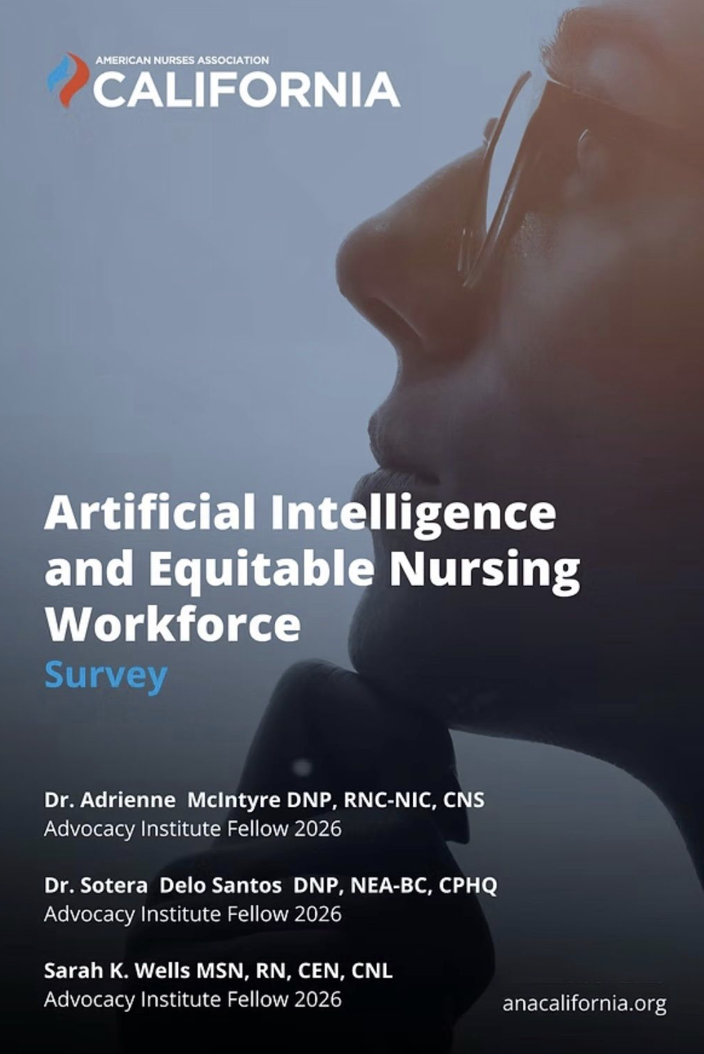
Sarah K. Wells, the founder of New Thing Nurse, is serving as a 2026 ANA-California Advocacy Institute Fellow, focusing on AI and equitable staffing. Working with Dr. Adrienne McIntyre and Dr. Sotera Delos Santos, Sarah is conducting a survey that explores how AI tools are used in hiring, staffing, scheduling, and patient assignment decisions across healthcare organizations. Insights will help inform policy recommendations that support responsible AI use, strengthen nursing oversight, and promote equitable workforce practices.

  • Take the AI and equitable nurse staffing survey here.

Sarah and her colleagues are working to contribute to a framework and policy recommendations that address the use of AI in equitable staffing models, grounded in organizational justice and fairness, and will ultimately co-host a panel discussion with nursing and healthcare leaders to share insights and facilitate conversation on equitable staffing models supported by AI in late 2026.


About the Author: Sarah K. Wells, MSN, RN, CEN, CNL is an experienced nurse career strategist dedicated to helping nurses and nurse practitioners of all experience levels and specialties achieve success in their nursing and NP journeys. Sarah founded New Thing Nurse and NTN Consults to help provide support and guidance to the nursing and healthcare community in a simple and direct format. Sarah’s vision is to foster a more supportive and fulfilled nursing world that spreads throughout healthcare and beyond.

Sarah is serving as a 2026 Advocacy Fellow with ANA-California, focusing on AI and equitable nurse staffing. Learn more about the 2026 ANA-California Advocacy Fellowships.


New Thing Nurse helps the nursing and NP community thrive in their careers! Join us on IG or Facebook @newthingnurse 🩺

April 29, 2026 /Sarah Wells
2026, LINKEDIN, SOCIAL MEDIA, PROFESSIONAL, NETWORKING, NEW THING NURSE, RESUME, JOB APPLICATIONS, NEW JOB, ATS, NURSE, NURSING, NURSING STUDENT, NURSE TRIBE, NURSE MOM, NURSE LEADER, NURSE CONSULTANT, NURSEING, RN, REGISTERED NURSE, STUDENT NURSE, NURSING SCHOOL, FUTURE NURSE, RNS, NURSING STUDENTS, NURSINGSCHOOL, NURSINGSTUDENT, JOB, FIRST JOB, JOBS, NURS JOB, NURSE JOB, JOB OPPORTUNITIES, JOB SKILLS, RESUME WRITING, SKILSS, HOW TO, MYTHS, TRUTH, TRAVEL, TRAVELING, TRAVEL NURSE, TRAVEL NURSING, ICU, ER, ED, ED NURSE, ER NURSE, ICU NURSE, PCU, MEDICAL SURGICAL, TELEMETRY, HOSPITAL, HOSPITAL JOB, HOSPITAL LIFE, STUDENT NURSE LIFE, MEDICAL, MEDICINE, HEALTHCARE, HEALTH, DIY, DO IT YOURSELF, JOB SEARCH, NURSE LIFE, NURSE STRONG, NURSE LOVE, LOVE, SUCCESS, SUCCESSFUL, SUCCEED, CLIENTS, CLINIC, CLINICS, COVER LETTER, INTERVIEW, INTERVIEWS, INTERVIEW ADVICE, ADVICE, INTERVIEW COACHING, INTERVIEW COACH, INTERVIEWER, JOB INTERVIEWS, JOB INTERVIEW, PAY, COMPENSATION, PAYCHECK, PAY CHECK, JOB ADVICE, NEGOTIATIONS, WAGES, WAGE, PRECEPTOR, PRECEPTORSHIP, NEW GRAD NURSE, NURSINGSTUDENTLIFE, ORIENTATION, INTENTIONS, NEW YEAR, GOALS, ADVOCACY, AI, ARTIFICIAL INTELLIGENCE, WORKFORCE BUILDING, STAFFING, NURSE STAFFING, hiring, scheduling, staffing, nurse staffing
Comment

When AI Screens Out Care: How Applicant Tracking Systems Undermine Equitable Hiring in Nursing

April 07, 2026 by Sarah Wells

By: Sarah K. Wells MSN RN CEN CNL

The Problem with Tech in Hiring

Applicant Tracking System (ATS) software—now commonly enhanced with artificial intelligence—was designed to streamline hiring. In nursing, where workforce shortages are real and urgent, that efficiency sounds like a win. But there’s a harder truth: these systems can quietly reinforce inequities and filter out strong, qualified nurse candidates before a human ever reviews their application.

ATS platforms prioritize keyword matching, formatting, and predictive ranking. That means candidates who don’t “speak the algorithm’s language” are less likely to move forward—even if they are clinically excellent. New graduates, internationally educated nurses, first-generation college graduates, and people of color, among other candidate groups with diverse backgrounds, can be especially vulnerable. Their experience may be rich, but if it’s not translated into the exact phrasing the system expects, it can be overlooked.

AI integrations add another layer of concern. These tools are often trained on historical hiring data, which can reflect longstanding biases in healthcare. If past hiring favored certain schools, career paths, or demographics, AI can unintentionally replicate those patterns at scale—under the guise of objectivity.

Digital Literacy

There’s also a digital literacy gap. Not every nurse has equal access to coaching on ATS optimization, professional resume writing, or LinkedIn strategies. Nurses working multiple jobs, those from under-resourced backgrounds, or those re-entering the workforce may be disproportionately disadvantaged by systems that reward polish over potential.

The Impact

The result? A hiring process that can exclude diverse talent at the front door - before interviews, before skills assessments, before human connection.

What is the solution?

Healthcare organizations have a responsibility to examine this. Equitable hiring isn’t just about intention; it’s about process. That means auditing ATS tools for bias, reevaluating rigid keyword filters, incorporating human review earlier in the process, and educating applicants on how to navigate these systems.

Because in a profession built on advocacy and equity, our hiring practices should reflect the same values.

New Thing Nurse is addressing the problem.

Sarah K. Wells, the founder of New Thing Nurse, is serving as a 2026 ANA-California Advocacy Institute Fellow, focusing on AI and equitable staffing. Working with Dr. Adrienne McIntyre and Dr. Sotera Delos Santos, Sarah is conducting a survey that explores how AI tools are used in hiring, staffing, scheduling, and patient assignment decisions across healthcare organizations. Insights will help inform policy recommendations that support responsible AI use, strengthen nursing oversight, and promote equitable workforce practices.

  • Take the AI and equitable nurse staffing survey here.

Sarah and her colleagues are working to contribute to a framework and policy recommendations that address the use of AI in equitable staffing models, grounded in organizational justice and fairness, and will ultimately co-host a panel discussion with nursing and healthcare leaders to share insights and facilitate conversation on equitable staffing models supported by AI in late 2026.


About the Author: Sarah K. Wells, MSN, RN, CEN, CNL is an experienced nurse career strategist dedicated to helping nurses and nurse practitioners of all experience levels and specialties achieve success in their nursing and NP journeys. Sarah founded New Thing Nurse to help provide support and guidance to the nursing community in a simple and direct format. Sarah’s vision is to foster a more supportive and fulfilled nursing world that spreads throughout healthcare and beyond.

Sarah is serving as a 2026 Advocacy Fellow with ANA-California, focusing on AI and equitable nurse staffing. Learn more about the 2026 ANA-California Advocacy Fellowships.


New Thing Nurse helps the nursing and NP community thrive in their careers! Join us on IG or Facebook @newthingnurse 🩺

April 07, 2026 /Sarah Wells
2026, LINKEDIN, SOCIAL MEDIA, PROFESSIONAL, NETWORKING, NEW THING NURSE, RESUME, JOB APPLICATIONS, NEW JOB, ATS, NURSE, NURSING, NURSING STUDENT, NURSE TRIBE, NURSE MOM, NURSE LEADER, NURSE CONSULTANT, NURSEING, RN, REGISTERED NURSE, STUDENT NURSE, NURSING SCHOOL, FUTURE NURSE, RNS, NURSING STUDENTS, NURSINGSCHOOL, NURSINGSTUDENT, JOB, FIRST JOB, JOBS, NURS JOB, NURSE JOB, JOB OPPORTUNITIES, JOB SKILLS, RESUME WRITING, SKILSS, HOW TO, MYTHS, TRUTH, TRAVEL, TRAVELING, TRAVEL NURSE, TRAVEL NURSING, ICU, ER, ED, ED NURSE, ER NURSE, ICU NURSE, PCU, MEDICAL SURGICAL, TELEMETRY, HOSPITAL, HOSPITAL JOB, HOSPITAL LIFE, STUDENT NURSE LIFE, MEDICAL, MEDICINE, HEALTHCARE, HEALTH, DIY, DO IT YOURSELF, JOB SEARCH, NURSE LIFE, NURSE STRONG, NURSE LOVE, LOVE, SUCCESS, SUCCESSFUL, SUCCEED, CLIENTS, CLINIC, CLINICS, COVER LETTER, INTERVIEW, INTERVIEWS, INTERVIEW ADVICE, ADVICE, INTERVIEW COACHING, INTERVIEW COACH, INTERVIEWER, JOB INTERVIEWS, JOB INTERVIEW, PAY, COMPENSATION, PAYCHECK, PAY CHECK, JOB ADVICE, NEGOTIATIONS, WAGES, WAGE, PRECEPTOR, PRECEPTORSHIP, NEW GRAD NURSE, NURSINGSTUDENTLIFE, ORIENTATION, INTENTIONS, NEW YEAR, GOALS, ADVOCACY, AI, ARTIFICIAL INTELLIGENCE, WORKFORCE BUILDING, staffing, nurse staffing
Comment

AI & Nursing: What Nurse Leaders Are Learning Now

March 17, 2026 by Sarah Wells

By: Sarah K. Wells MSN RN CEN CNL

Artificial intelligence (AI) is rapidly moving from a concept discussed in innovation labs to a technology that nurses are encountering in everyday practice. I recently attended the 2nd Annual Nurse Leader’s Summit hosted by ICD Events and ANA-California in La Jolla, California. During nursing leadership discussions and roundtables, one theme was clear: AI is already shaping healthcare, but many organizations—and many nurses—are still figuring out how to use it safely, effectively, and responsibly.

AI Is Already in the Workflow

In many healthcare settings, AI is quietly embedded in existing tools. Ambient documentation systems can listen to clinical conversations and generate notes, predictive analytics can detect patient deterioration earlier, and AI-enabled systems can help analyze staffing needs or chart audits.

These tools have the potential to dramatically reduce administrative burden. Nurses currently spend a significant portion of their shifts documenting care rather than delivering it. AI documentation tools may reduce charting time, allowing nurses to spend more time with patients and families.

AI is also emerging in operational areas such as staffing, scheduling, and workforce planning. Data-driven scheduling tools may help reduce bias, balance workloads, and predict staffing needs based on patient acuity and demand. However, as Dr. Katie Boston-Leary shared, important strategies to support appropriate staffing must be integrated into any AI technology used to support staffing. These include reforming the work environment, valuing the unique contributions of nurses, innovating models of care, improving regulatory efficiency, and establishing staffing standards that ensure quality care.

Competencies for the AI Era

Despite these opportunities, many organizations acknowledge a gap in AI competencies among nurses and nurse leaders. One of the biggest challenges is that many professionals “don’t know what they don’t know” about AI.

Building AI readiness requires structured education and competency development. Key skills for nurses may include:

  • Understanding how AI systems generate recommendations

  • Evaluating whether AI outputs are accurate and clinically appropriate

  • Recognizing bias and data limitations

  • Protecting patient privacy and maintaining HIPAA compliance

  • Knowing when AI should not be used

One organization supporting nurses in leading the way with AI is Nurses for AI. Co-founded by Dr. Susan Deane and Dr. Irina Koyfman, Nurses for AI is committed to:

  • Nurse-led perspectives

  • Ethical leadership in AI

  • Transparency and responsible use

  • Collaboration over competition

  • Keeping the human at the center of innovation

Meanwhile, some healthcare organizations are beginning to incorporate AI education into simulation, competency frameworks, and just-in-time learning methods such as shift huddles, newsletters, and brief training modules.

Governance, Safety, and Accountability

Another consistent theme across discussions was the need for clear governance structures. Many institutions currently lack formal AI policies, even as AI tools are being introduced into clinical workflows.

Responsible AI implementation requires leadership oversight and structured frameworks that address:

  • Tool selection and validation

  • Risk and bias assessment

  • Data privacy and security

  • Ongoing monitoring of performance

  • Reporting systems for unsafe or inaccurate AI outputs

Importantly, clinicians remain responsible for the final clinical decision. AI may assist with documentation or recommendations, but accountability still rests with the licensed professional who signs the record.

Preserving the Human Side of Nursing

While AI promises efficiency, nurse leaders emphasized that the goal is not to replace nursing judgment. As Dr. Sharicca Miller emphasized in her talk, AI should augment clinical insight—not substitute for it.

Nursing remains a relational profession built on empathy, communication, and critical thinking. Many participants noted that the true opportunity of AI is not automation alone, but the possibility of returning time to the most meaningful parts of nursing: listening to patients, supporting families, and coordinating complex care.

The Road Ahead

AI adoption will likely look different across healthcare settings. Large health systems may invest in advanced predictive analytics, while smaller organizations may begin with modest tools for documentation or education.

What is clear, however, is that nursing must remain actively involved in shaping how AI is implemented. When nurses are included in governance, design, and evaluation of AI systems, these tools are far more likely to support safe care, equitable workflows, and sustainable nursing practice.

The future of AI in healthcare will not be defined solely by technology. It will be defined by how well nurses lead its integration.

Want to join the conversation about AI and nurse staffing?

Take the ANA-California Survey on how AI may be impacting nurse staffing at your facility.


New Thing Nurse helps the nursing and NP community thrive in their careers! Join us on IG or Facebook @newthingnurse 🩺


About the Author: Sarah K. Wells, MSN, RN, CEN, CNL is an experienced nurse career strategist dedicated to helping nurses and nurse practitioners of all experience levels and specialties achieve success in their nursing and NP journeys. Sarah founded New Thing Nurse to help provide support and guidance to the nursing community in a simple and direct format. Sarah’s vision is to foster a more supportive and fulfilled nursing world that spreads throughout healthcare and beyond.

Sarah is serving as a 2026 Advocacy Fellow with ANA-California, focusing on AI and equitable nurse staffing. Learn more about the 2026 ANA-California Advocacy Fellowships.

March 17, 2026 /Sarah Wells
2026, LINKEDIN, SOCIAL MEDIA, PROFESSIONAL, NETWORKING, NEW THING NURSE, RESUME, JOB APPLICATIONS, NEW JOB, ATS, NURSE, NURSING, NURSING STUDENT, NURSE TRIBE, NURSE MOM, NURSE LEADER, NURSE CONSULTANT, NURSEING, RN, REGISTERED NURSE, STUDENT NURSE, NURSING SCHOOL, FUTURE NURSE, RNS, NURSING STUDENTS, NURSINGSCHOOL, NURSINGSTUDENT, JOB, FIRST JOB, JOBS, NURS JOB, NURSE JOB, JOB OPPORTUNITIES, JOB SKILLS, RESUME WRITING, SKILSS, HOW TO, MYTHS, TRUTH, TRAVEL, TRAVELING, TRAVEL NURSE, TRAVEL NURSING, ICU, ER, ED, ED NURSE, ER NURSE, ICU NURSE, PCU, MEDICAL SURGICAL, TELEMETRY, HOSPITAL, HOSPITAL JOB, HOSPITAL LIFE, STUDENT NURSE LIFE, MEDICAL, MEDICINE, HEALTHCARE, HEALTH, DIY, DO IT YOURSELF, JOB SEARCH, NURSE LIFE, NURSE STRONG, NURSE LOVE, LOVE, SUCCESS, SUCCESSFUL, SUCCEED, CLIENTS, CLINIC, CLINICS, COVER LETTER, INTERVIEW, INTERVIEWS, INTERVIEW ADVICE, ADVICE, INTERVIEW COACHING, INTERVIEW COACH, INTERVIEWER, JOB INTERVIEWS, JOB INTERVIEW, PAY, COMPENSATION, PAYCHECK, PAY CHECK, JOB ADVICE, NEGOTIATIONS, WAGES, WAGE, PRECEPTOR, PRECEPTORSHIP, NEW GRAD NURSE, NURSINGSTUDENTLIFE, ORIENTATION, INTENTIONS, NEW YEAR, GOALS, ADVOCACY, AI, artificial intelligence

AI & Nursing: Just the beginning

March 05, 2026 by Sarah Wells

By: Sarah K. Wells MSN RN CEN CNL

Artificial intelligence (AI) has become part of the healthcare landscape, and nursing is no exception. While the idea of AI may feel futuristic, many nurses are already interacting with AI-powered tools in their daily work, often without realizing it. From clinical decision support systems to predictive staffing models and ambient listening documentation tools, AI is beginning to shape how care is delivered and how nurses work.

At its best, AI may reduce the administrative burden that has long contributed to nurse burnout. Technologies such as digital scribes and smart documentation tools can assist with charting, allowing nurses to spend more time at the bedside and less time at the computer. AI can also analyze large datasets to identify patterns that may help predict patient deterioration, support triage decisions, or create efficient staffing plans.

However, the growing use of AI in healthcare also raises important questions for the nursing profession. Nurses must be involved in conversations about how these technologies are developed, implemented, and evaluated. Without nursing input, AI tools may fail to reflect the realities of clinical practice or the nuances of patient care.

There are also important considerations around transparency, bias, and equity. If AI systems are trained on incomplete or biased data, they may unintentionally reinforce existing disparities in healthcare. Nurses, as patient advocates, play a critical role in ensuring that technology supports equitable and ethical care.

AI will not replace nurses. Instead, it has the potential to become another tool that supports clinical judgment, strengthens workflows, and enhances patient care - if nurses help lead the way.


New Thing Nurse helps the nursing and NP community thrive in their careers! Join us on IG or Facebook @newthingnurse 🩺

About the Author: Sarah K. Wells, MSN, RN, CEN, CNL is an experienced nurse career strategist dedicated to helping nurses and nurse practitioners of all experience levels and specialties achieve success in their nursing and NP journeys. Sarah founded New Thing Nurse to help provide support and guidance to the nursing community in a simple and direct format. Sarah’s vision is to foster a more supportive and fulfilled nursing world that spreads throughout healthcare and beyond.

March 05, 2026 /Sarah Wells
2026, LINKEDIN, SOCIAL MEDIA, PROFESSIONAL, NETWORKING, NEW THING NURSE, RESUME, JOB APPLICATIONS, NEW JOB, ATS, NURSE, NURSING, NURSING STUDENT, NURSE TRIBE, NURSE MOM, NURSE LEADER, NURSE CONSULTANT, NURSEING, RN, REGISTERED NURSE, STUDENT NURSE, NURSING SCHOOL, FUTURE NURSE, RNS, NURSING STUDENTS, NURSINGSCHOOL, NURSINGSTUDENT, JOB, FIRST JOB, JOBS, NURS JOB, NURSE JOB, JOB OPPORTUNITIES, JOB SKILLS, RESUME WRITING, SKILSS, HOW TO, MYTHS, TRUTH, TRAVEL, TRAVELING, TRAVEL NURSE, TRAVEL NURSING, ICU, ER, ED, ED NURSE, ER NURSE, ICU NURSE, PCU, MEDICAL SURGICAL, TELEMETRY, HOSPITAL, HOSPITAL JOB, HOSPITAL LIFE, STUDENT NURSE LIFE, MEDICAL, MEDICINE, HEALTHCARE, HEALTH, DIY, DO IT YOURSELF, JOB SEARCH, NURSE LIFE, NURSE STRONG, NURSE LOVE, LOVE, SUCCESS, SUCCESSFUL, SUCCEED, CLIENTS, CLINIC, CLINICS, COVER LETTER, INTERVIEW, INTERVIEWS, INTERVIEW ADVICE, ADVICE, INTERVIEW COACHING, INTERVIEW COACH, INTERVIEWER, JOB INTERVIEWS, JOB INTERVIEW, PAY, COMPENSATION, PAYCHECK, PAY CHECK, JOB ADVICE, NEGOTIATIONS, WAGES, WAGE, PRECEPTOR, PRECEPTORSHIP, NEW GRAD NURSE, NURSINGSTUDENTLIFE, ORIENTATION, INTENTIONS, NEW YEAR, GOALS, ADVOCACY, AI, artificial intelligence
Comment

Powered by Squarespace