Closing the Communication Gap in Nursing
By: Sarah K. Wells MSN RN CEN CNL
Discover how AI-powered nurse communication training bridges the gap between school and the bedside to reduce medical errors and improve patient satisfaction.
When a breakdown in care occurs, it is rarely due to a lack of clinical knowledge. The Joint Commission Sentinel Event Data Annual Review consistently highlights that hospital adverse events - including falls, treatment delays, and wrong-site surgeries - are overwhelmingly rooted in communication failures during handovers, care transitions, and acute emergencies.
To protect our patients and stabilize our workforce, we must fundamentally reshape how we build and sustain clinical communication. High-fidelity communication training is no longer a "soft skill" luxury; it is a clinical, financial, and educational imperative. To be effective, this training must span the entire developmental continuum: from undergraduate nursing education to formal residency programs for new graduates.
The Ripple Effect
To bridge these academic and clinical gaps, Ripple Health AI delivers tailored solutions designed to support, scale, and standardize this vital work. Recent feedback highlights the tangible, positive practice perceptions experienced by nursing students using our advanced, interactive communication training tools.
In May 2026, pre-licensure students in a Bachelor of Science in Nursing (BSN) program at a top-tier university on the West Coast utilized the Ripple Health AI platform. Students completed the specialized course, “Communicating with Patients: The 4 C's of Relational Care for Nurses,” sharing detailed insights on how the training shifted their outlook on clinical readiness.
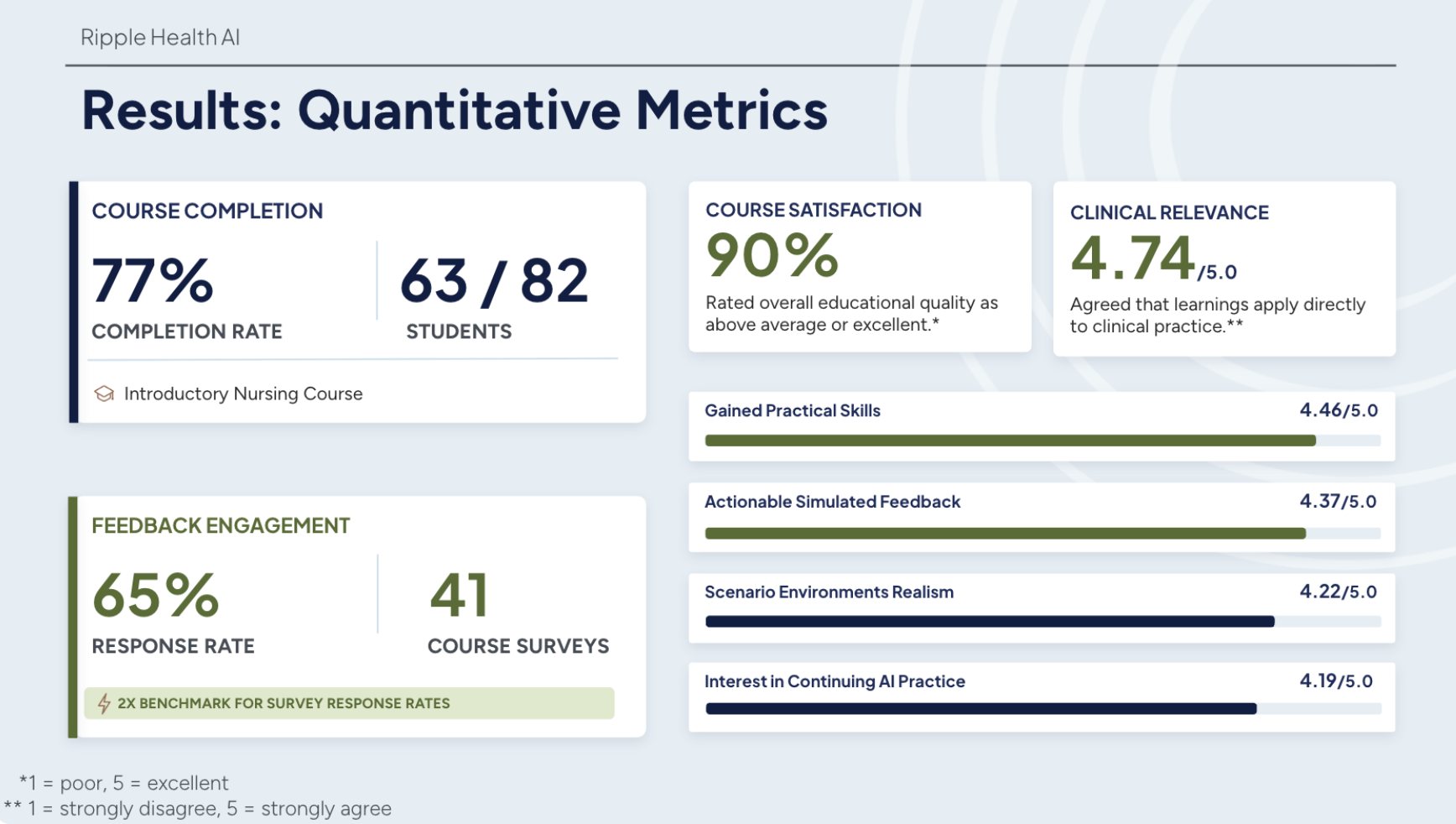
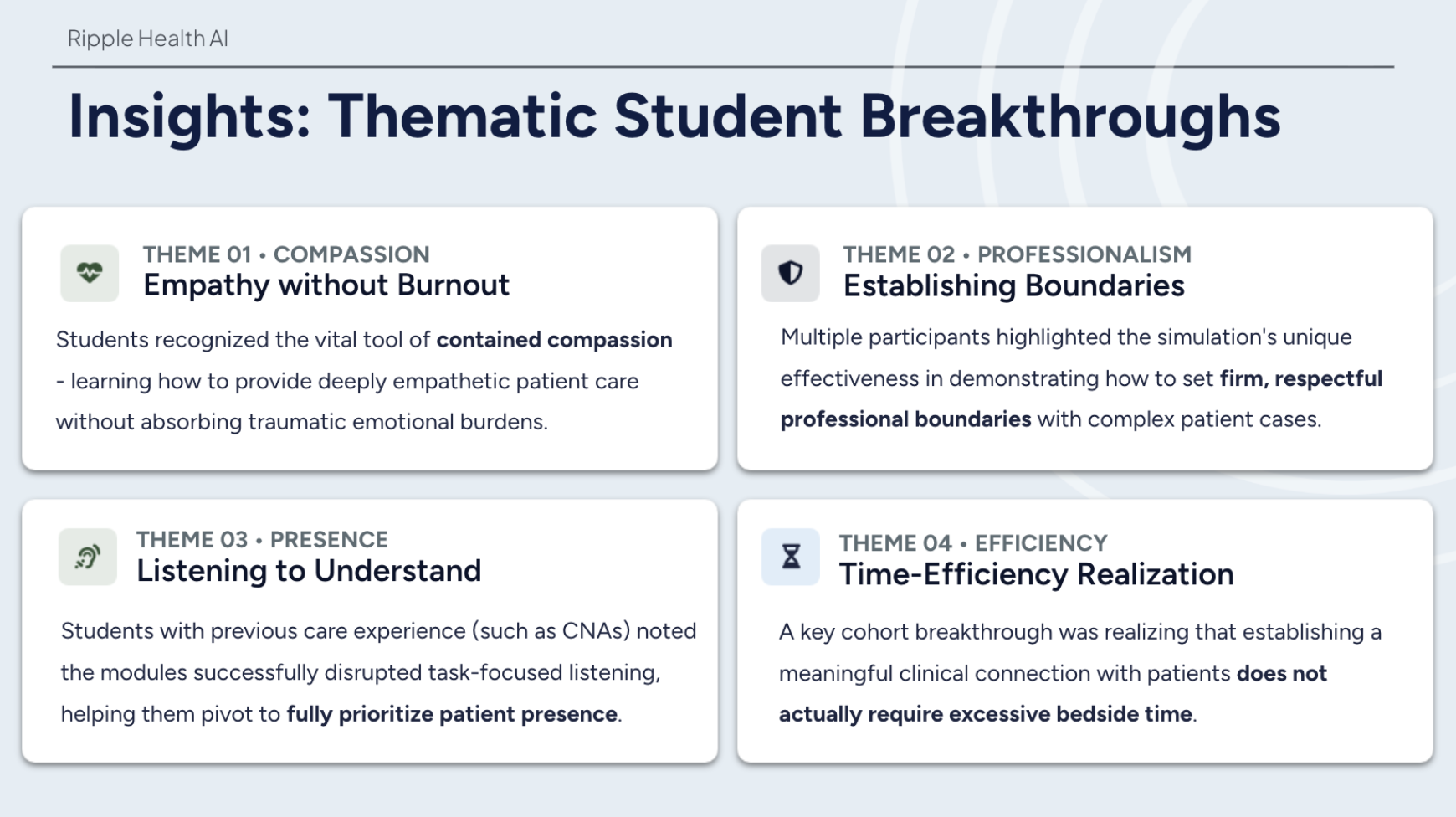
The evaluation underscored remarkable efficacy across key learning domains, with students heavily praising the course's deep relevance to clinical practice and the overall quality of the curriculum. Furthermore, learners highlighted the timeliness and actionability of the automated feedback, noting that the immediate guidance helped them self-correct and grasp therapeutic communication concepts in real-time.
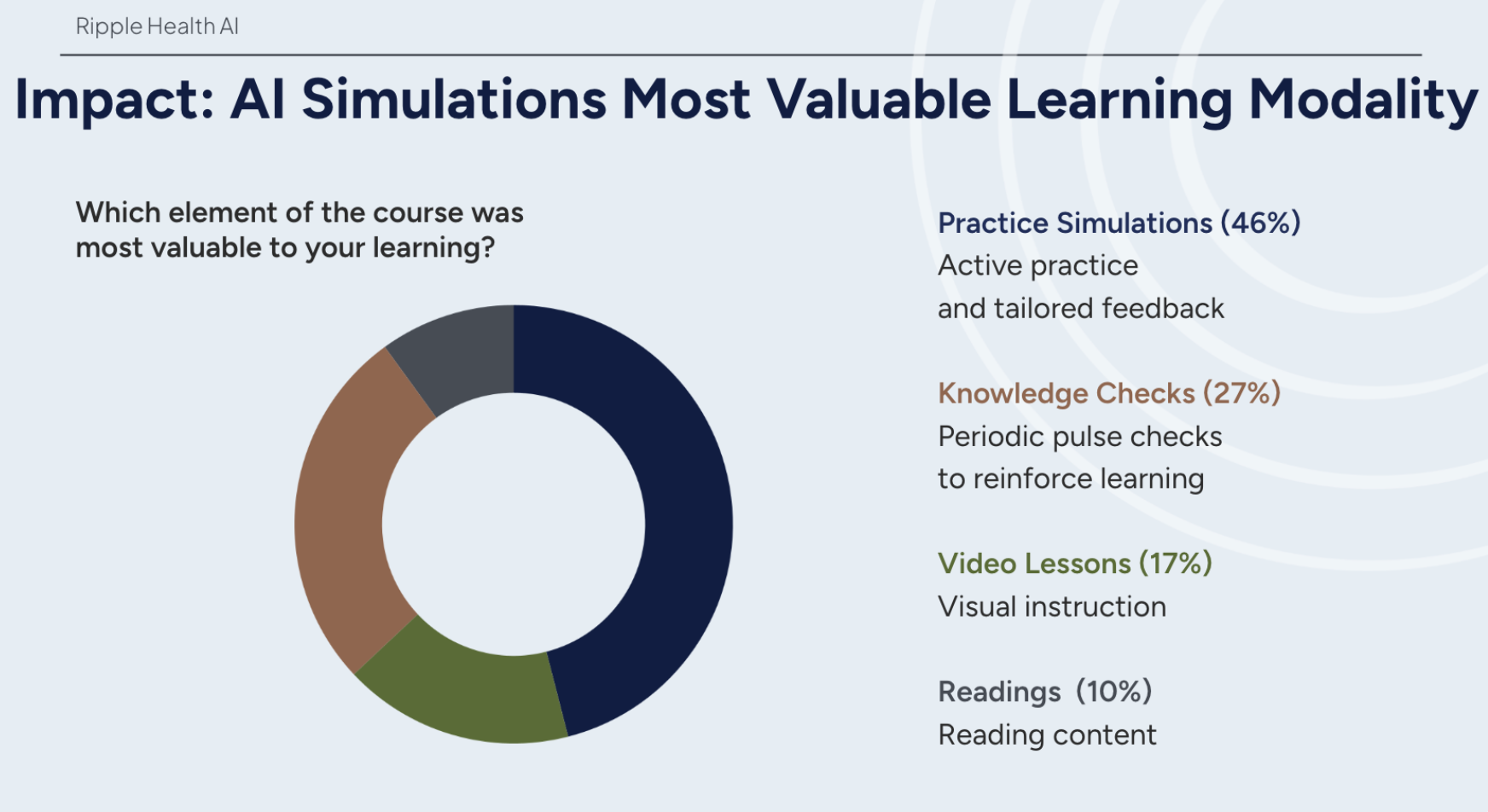
When analyzing what made the curriculum so impactful, the learner verdict was unanimous: the AI-powered practice simulations were the single most valuable element. Students consistently shared that the scenarios felt remarkably authentic, making them feel as though they were interacting with a real, live patient rather than a software interface.
A Four-Pillar Framework for Transforming the Pipeline
1. Undergraduate Nursing Education: Building the Foundation
When nursing students enter clinical rotations, they are often overwhelmed by technical data. However, translating a clinical spike in blood pressure into a clear, actionable directive to a busy physician requires a completely different cognitive skill set.
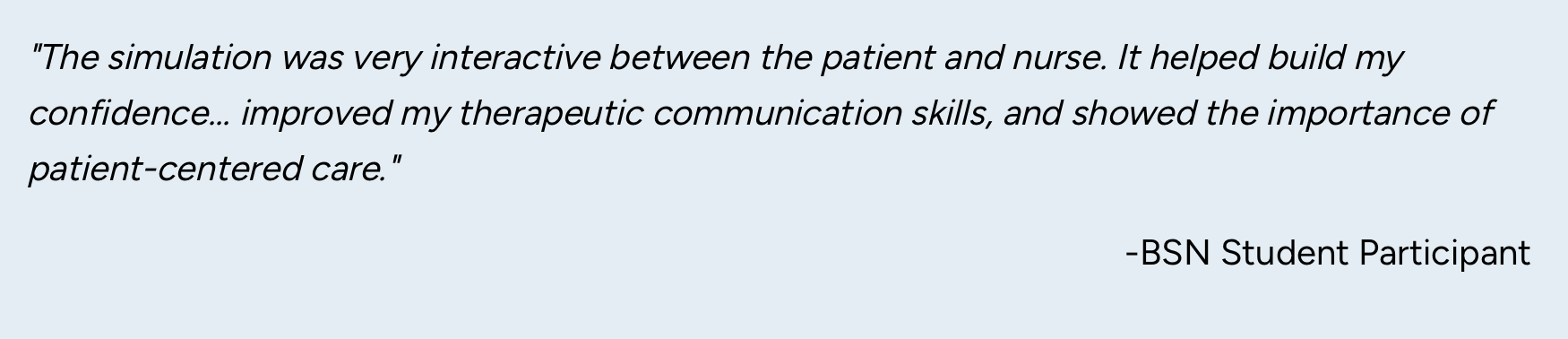
Structured communication training acts as an architectural blueprint for high-stress dialogue. Experiential student feedback from the pilot confirmed that practicing in these safe, AI-simulated environments directly targets this gap, leaving students with an immediate boost in therapeutic communication skills and a deeper appreciation for patient-centered care. When students learn how to navigate realistic scenarios early on, they enter our hospitals equipped to cut through clinical noise - mitigating preventable medical errors before they ever reach the bedside.
2. New Graduate Nurse Training: Bridging the Transition into Practice
The transition from student to novice nurse is notoriously jarring. While undergraduate education sets the baseline, the high-stakes reality of independent practice demands targeted, ongoing communication training during the transition to practice (TTP) or nurse residency phase.
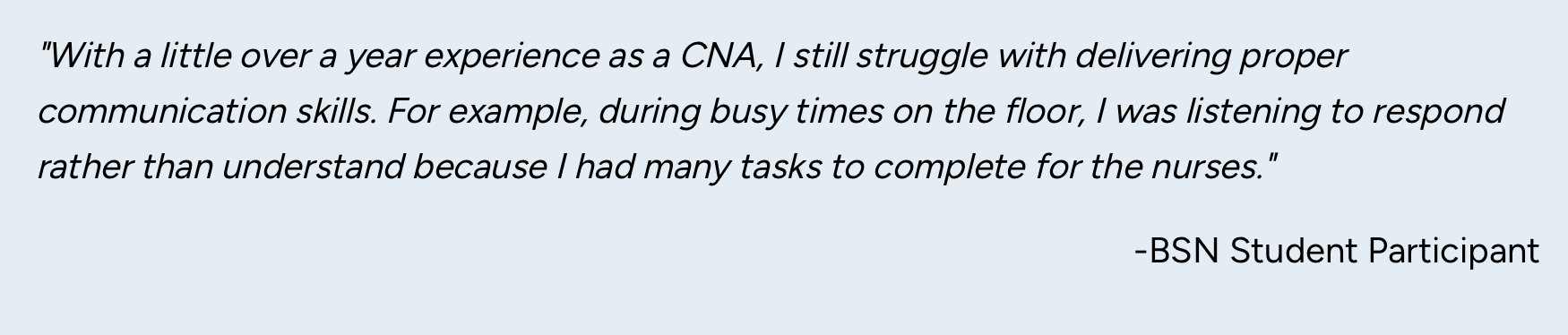
New graduates regularly cite multidisciplinary conflict and a lack of psychological safety as primary drivers for leaving the profession within their first two years. Immersive training bridges this divide by directly fostering professional confidence. As students noted in the pilot, interactive practice helped them understand the direct line between therapeutic dialogue and safer clinical outcomes. Teaching new graduates to navigate workplace friction, manage difficult patient interactions, and advocate assertively for safety under real-world pressures dramatically reduces role confusion and stabilizes early-career job satisfaction.
3. Elevating the Patient Experience
Patient satisfaction is intimately tied to how care is delivered across all stages of a nurse's career. Research indicates that patients and caregivers evaluate a nurse's empathy, active listening, and presence just as heavily as their technical competence.
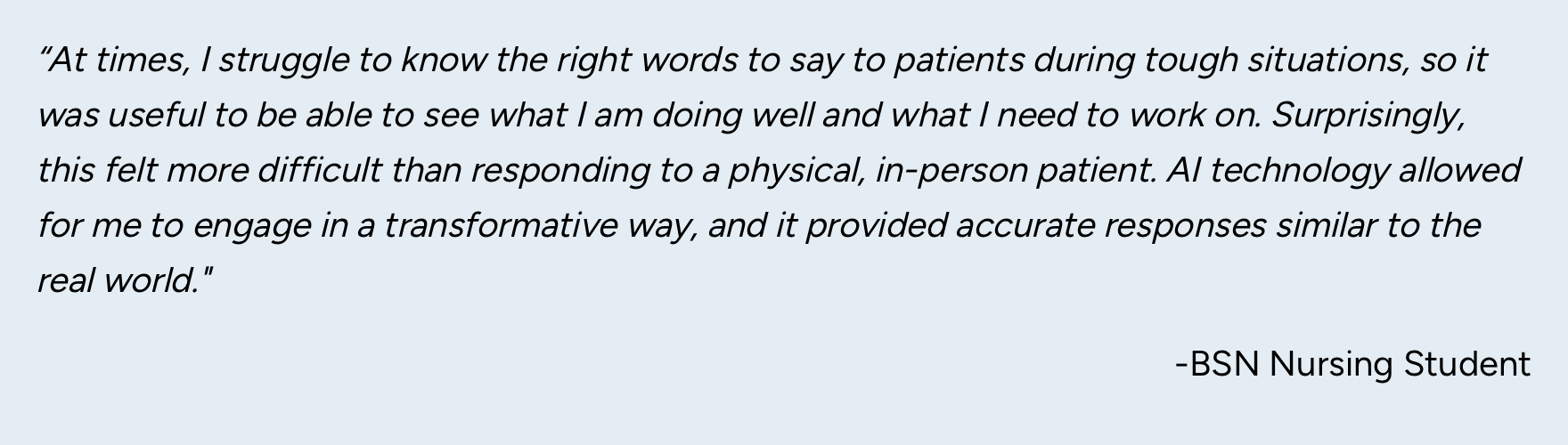
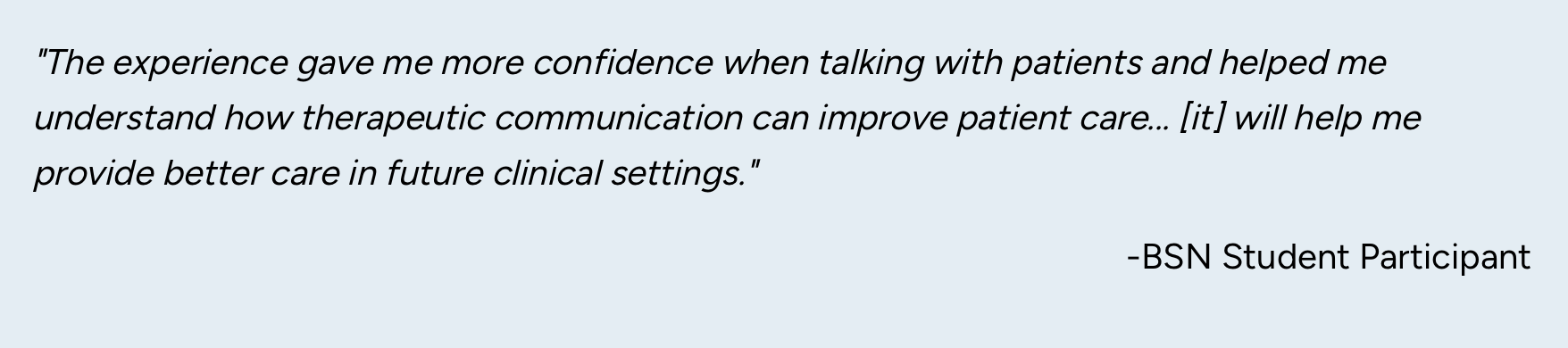
Formal communication interventions help both students and new graduates cultivate emotional intelligence and rapport. Participants in the training remarked that the realistic nature of the AI simulations gave them a clearer vision of how to provide better, more empathetic care in their future clinical placements. By maintaining this training standard through their first year of practice, we accelerate nurse-patient trust, directly improving post-discharge compliance, care quality, and patient satisfaction scores.
4. The Faculty and Mentor Imperative: Leveraging Technology for Success
We cannot expect students or new graduates to master complex professional dialogue if their instructors and clinical preceptors are not explicitly equipped to teach it. Communication training is highly nuanced and requires dedicated institutional support.
Shifting from traditional lecturing or passive monitoring to advanced simulation requires the right tools. Educators and preceptors must leverage specialized technology to complement training, fostering psychological safety, evidence-based feedback, and supportive, zero-risk environments where learners can safely fail, iterate, and grow without the pressure of live clinical stakes.
The Strategic Next Step for Leaders
We can no longer afford to treat communication as an innate trait that clinicians will simply "pick up" on the floor. It is a highly technical, trainable competency that must be built in school, reinforced during onboarding, and evaluated regularly.
Ripple Health AI offers personalized, AI-driven learning experiences that deliver individualized, actionable feedback in real-time. Our scalable technology solutions tailor directly to your institutional specifications, aligning clinical expertise with essential interpersonal skills to ensure the next generation of your nursing workforce is both confident and competent.
As healthcare and academic leaders, investing in robust communication simulation is our clearest path forward. By securing the communicative readiness of our students and new graduates today, we ensure safer clinical outcomes, stronger team retention, and a higher standard of care for tomorrow.
References
Arrogante, O., Ortuño-Soriano, I., & Fernandes-Ribeiro, A. (2025). Attitudinal shifts toward communication skill development in first-year nursing cohorts via high-fidelity simulation: A quasi-experimental analysis. Clinical Simulation in Nursing, 101.
Cho, H. and Steege, L.M. (2025). Authentic Leadership, Psychological Safety, Missed Nursing Care, and Intention to Leave Among Hospital Nurses. Int Nurs Rev, 72: e70065. https://doi.org/10.1111/inr.70065
Lyu, XC., Huang, SS., Ye, XM. et al. (2024). What influences newly graduated registered nurses’ intention to leave the nursing profession? An integrative review. BMC Nurs 23, 57. https://doi.org/10.1186/s12912-023-01685-z
Mercan, N., Coskun, S., & Apaydın Demirci, Z. (2023). Efficacy of a communication skills training for nursing students: a quasi-experimental study. J Psy Nurs, 14(3), 200-209. https://doi.org/10.14744/phd.2023.02438.
The Joint Commission. (2025). Sentinel Event Data 2024 Annual Review. https://digitalassets.jointcommission.org/api/public/content/eac7511986c0442a9c1ae04b1aa02cc0?v=ad34daa0
About the Author: Sarah K. Wells, MSN, RN, CEN, CNL is an experienced nurse career strategist dedicated to helping nurses and nurse practitioners of all experience levels and specialties achieve success in their nursing and NP journeys. Sarah founded New Thing Nurse and NTN Consults to help provide support and guidance to the nursing and healthcare community in a simple and direct format. Sarah’s vision is to foster a more supportive and fulfilled nursing world that spreads throughout healthcare and beyond.
Sarah has partnered with Ripple Health AI as a Nurse Advisor and Business Development Lead. The original version of this article appeared on the Ripple Health AI Insights blog.
Sarah is serving as a 2026 Advocacy Fellow with ANA-California, focusing on AI and equitable nurse staffing. Learn more about the 2026 ANA-California Advocacy Fellowships.
New Thing Nurse helps the nursing and NP community thrive in their careers! Join us on IG or Facebook @newthingnurse 🩺